





The imposition of liability in claims involving child pedestrians
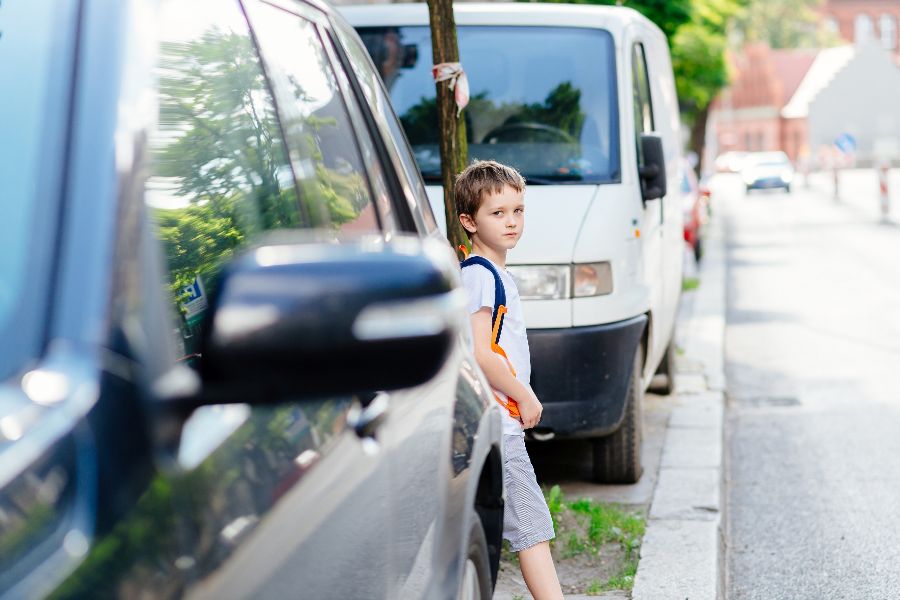
The Courts have long recognised the vulnerability of particular road users, especially children, in the context of claims for damages. The Highway Code sets out a defined hierarchy of road users identifying pedestrians and, in particular, children, as one of the most vulnerable road users at risk from injury arising in respect of road traffic accidents. Rule 205 of the Highway Code specifically states “In any interaction between road users, those who can cause the greatest harm have the greatest responsibility to reduce the danger or threat that they pose to others.”
That being said, it must be borne in mind that it is not the case that where there is a collision between the vehicle and a child pedestrian that liability on the part of the driver will always be imposed. It remains the case that all claimants must satisfy the legal test and establish, on the balance of probabilities, that the driver was negligent in law.
As set out in the case of AB v Main 2015 (3183QB): “… The standard of care is that of the reasonably careful driver, armed with common sense and experience of the way pedestrians, particularly children, are likely to behave. If a real risk of a danger emerging would have been reasonably apparent to such a driver, then reasonable precautions must be taken; if the danger was no more than a mere possibility, which would not have occurred to a reasonable driver, then there is no obligation to take extraordinary precautions”.
The Highway Code stipulates that the speed limit applicable in a pedestrian area is the absolute maximum speed limit, and speed limits should not be treated as targets (Rules 125 and 146). Rule 205 states “There is a risk of pedestrians, especially children, stepping unexpectedly into the road. You should drive with the safety of children in mind at a speed suitable for the conditions”. Drivers are, therefore, specifically instructed to drive carefully and slowly when passing parked vehicles, especially ice cream vans or school buses, and near schools, with drivers to be cognisant of the type of area in which they are circulating.
It should be remembered, however, that there is no definition of what “driving slowly” or “a speed suitable for the conditions” constitutes. At 20 miles per hour, there is a one in 20 chance of the pedestrian being killed. The advisory speed limit near a school is 20 miles per hour, albeit this is not legally enforceable.
In the case of Gadsby v Hayes (2004)EWHC 2424 (KB) a car driver was driving between 15 to 20 miles per hour when she struck a 12 year old claimant who was using a pedestrian crossing near a school. The Court heard that there were approximately three to five children on either side of the crossing at the material time, and that the child stepped into the crossing when it was not a green light to do so. The claim was dismissed. Reasonable precautions did not require the driver to reduce her speed to 10 miles per hour (or indeed 14 mile per hour) when driving up to a green light at that crossing at that time of day.
In the case of NM v Wilkinson (2025)EWHC 2300 (KB) the claimant, aged 5 years old, along with his twin, had been collected from school by his older brother who was 15 years old. His sibling stopped to speak to a teacher, and the claimant made his own way across the road when he was struck by a truck. The Court held that the driver was driving at not more than 20 miles per hour on his approach to the collision and that the child claimant emerged from behind a parked or stationary vehicle. The claim was dismissed. While it was argued that on seeing an unaccompanied young child on one side of the road, a driver should reduce his or her speed, and the driver ought to have anticipated that the child may run into the road to join friends on the other side of the road, the Judge stated that “A careful driver cannot be expected, simply because they see an unaccompanied young child on the pavement, to significantly reduce their speed. That is not a reasonable expectation”. This case gives useful guidance of where drivers require to be particularly alert around young pedestrians, including where the child is facing and heading into the road, standing by the kerb appearing distracted, chasing a ball or another child. However, there were no circumstances in which it was held that in this case the driver should have been driving at considerably less than the 20 miles per hour advisory speed limit.
In summary, therefore, there is no specific rule which dictates that a reasonably careful driver must reduce their speed to considerably less than the advisory 20 miles per hour speed limit when in the vicinity of a school or an area with children on the pavement. There may be argument, however, that drivers must further reduce their speed where there are circumstances such as something unusual to alert a driver that a child presents a particular hazard. While each case will turn on its own particular facts, it remains the case that the Courts do recognise the imbalance between drivers and vulnerable road users in determining the matter of the issue of liability in the context of a personal injury claim.
Email Jacqueline Raitt
Call our personal injury claims team free on 0808 560 0872
Arrange a callback by using our enquiry form
Share this page
- Personal injury claims
- Our personal injury team
- How to make a personal injury compensation claim
- How to choose a personal injury solicitor
- Claim now
- Personal injury claim calculator
- How claims are valued
- Frequently asked questions
- Types of personal injury claim
- How to sue someone in the Scottish courts
- Recent successes
- Case studies
- Testimonials
- Injury Compensation Alliance
Call free: 0808 560 0872