





E-bike accident compensation claims
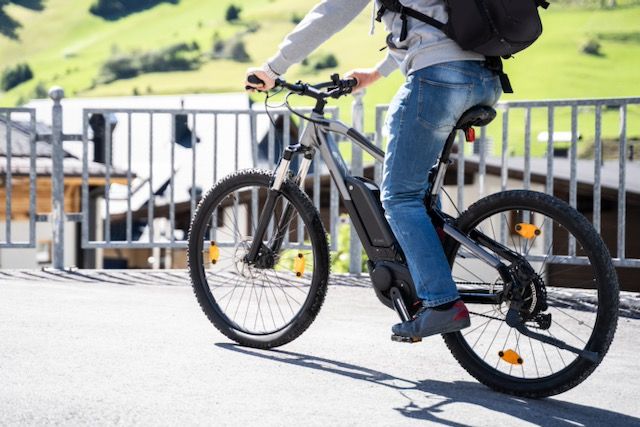
Electric bikes (e-bikes) are on the increase in Scotland and across the UK. They are becoming ever more popular as a sustainable way of commuting, with attraction to a wide age range. Although not as popular as in the rest of Europe (could it be our weather…..) e-bike sales are still experiencing significant, unprecedented growth in Scotland. In some parts of Scotland they represent over 50% of all bike purchases.

How are e-bikes viewed in law and what is the legal position if you are injured through the fault of someone riding an e-bike?
The effect of the Electrically Assisted Pedal Cycles (EAPC) Regulations 1983 (amended in 2015) is that in legal terms, those riding compliant e-bikes are seen in the same way as those riding a pushbike. For example, they do not require a helmet, they are permitted to use cycle paths and lanes, they don’t need a licence and there is no insurance requirement.
What is a compliant e-bike?
These are electric bikes which cannot be propelled by motor to go at more than 15.5 mph, with a continuous power output of 250 watts or less, and with pedals that propel the bike. They look like traditional bikes, often with an integrated battery pack in the downtube.
Therefore, if you fall victim to an accident caused by such a cyclist, you are in no different a position to having been injured through the fault of a push-bike cyclist. The reality is that you may have difficulty securing compensation unless by chance the cyclist has taken out bespoke cycle insurance, or is covered for such an accident through their home insurance, or if they have personal assets.
What about non-compliant e-bikes?
Of course, many e-bikes on our streets are not EAPC compliant - increasingly we see high powered e-bikes with speed and output well in excess of the criteria. Push bikes can easily be modified by insertion of a powerful motor. Such conversion kits are easily available online. However, such e-bikes are deemed in law to be ‘motor vehicles’ for the purposes of The Road Traffic Act. Therefore, insurance is mandatory and to be uninsured for such a cycle is a crime.
Some food delivery companies provide their self-employed riders with third party insurance for when they are on deliveries. Deliveroo is one such example. The reality of course is that the vast majority of e-bike riders will be uninsured. You may therefore assume that if you are injured as a result of an incident caused by the use of such a bike, a claim for compensation would be hopeless. In fact, the e-bike would be regarded as an uninsured motor vehicle in terms of The Uninsured and Untraced Drivers’ Agreement and in these circumstances a claim can be made against The Motor Insurers Bureau. This is a UK organisation that compensates the victims of negligent drivers who are uninsured or untraced. It is funded by motor insurance premiums. In such a case however, the claimant has to prove the bike was non-compliant. This of course can be difficult if the rider fled the scene or the bike has been destroyed. It is important therefore to take photos if at all possible and to report the incident to the police. CCTV footage may also prove invaluable.
In summary, whether an e-bike complies with the EAPC Regulations can significantly affect the prospects of pursuing a claim for compensation. If you are injured in such circumstances, it is vital that you obtain specialist personal injury legal advice.
Email Julie Harris
Call our personal injury claims team free on 0808 560 0872
Arrange a callback by using our enquiry form
Share this page
- Personal injury claims
- Our personal injury team
- How to make a personal injury compensation claim
- How to choose a personal injury solicitor
- Claim now
- Personal injury claim calculator
- How claims are valued
- Frequently asked questions
- Types of personal injury claim
- How to sue someone in the Scottish courts
- Recent successes
- Case studies
- Testimonials
- Injury Compensation Alliance
Call free: 0808 560 0872